
How to Prove the Other Driver Was Texting: Winning Your Virginia Car Accident Case
- brookthibault
- Dec 10, 2025
- 6 min read
Getting rear-ended by someone scrolling through Instagram or T-boned by a driver sending "just one quick text" can turn your life upside down in seconds. If you suspect the other driver was texting when they caused your Virginia car accident, you're not alone: and more importantly, you can prove it.
Virginia law treats texting while driving as a serious traffic violation, and establishing this negligent behavior can significantly strengthen your personal injury claim. But proving someone was on their phone requires more than just suspicion. You need concrete evidence that will hold up in court and convince insurance companies to pay fair compensation.
Here's your comprehensive guide to gathering the evidence you need to prove texting-while-driving in Virginia, protect your rights, and maximize your recovery.
Understanding Virginia's Texting While Driving Laws
Virginia Code § 46.2-1078.1 makes it illegal to read or send text messages while driving, with limited exceptions for emergency situations. This law applies to all drivers regardless of age and carries fines up to $250 for first-time offenders and $500 for subsequent violations.
When a driver violates this statute and causes an accident, they can be held liable for all resulting damages under Virginia's negligence laws. This means you can recover compensation for medical bills, lost wages, property damage, pain and suffering, and other losses directly caused by their reckless decision to text and drive.
The key is proving they were actually texting at the time of your crash.
Cell Phone Records: Your Strongest Evidence
Cell phone records provide the most compelling proof that a driver was texting during an accident. These digital timestamps create an irrefutable timeline showing exactly when someone sent messages, made calls, or used apps.
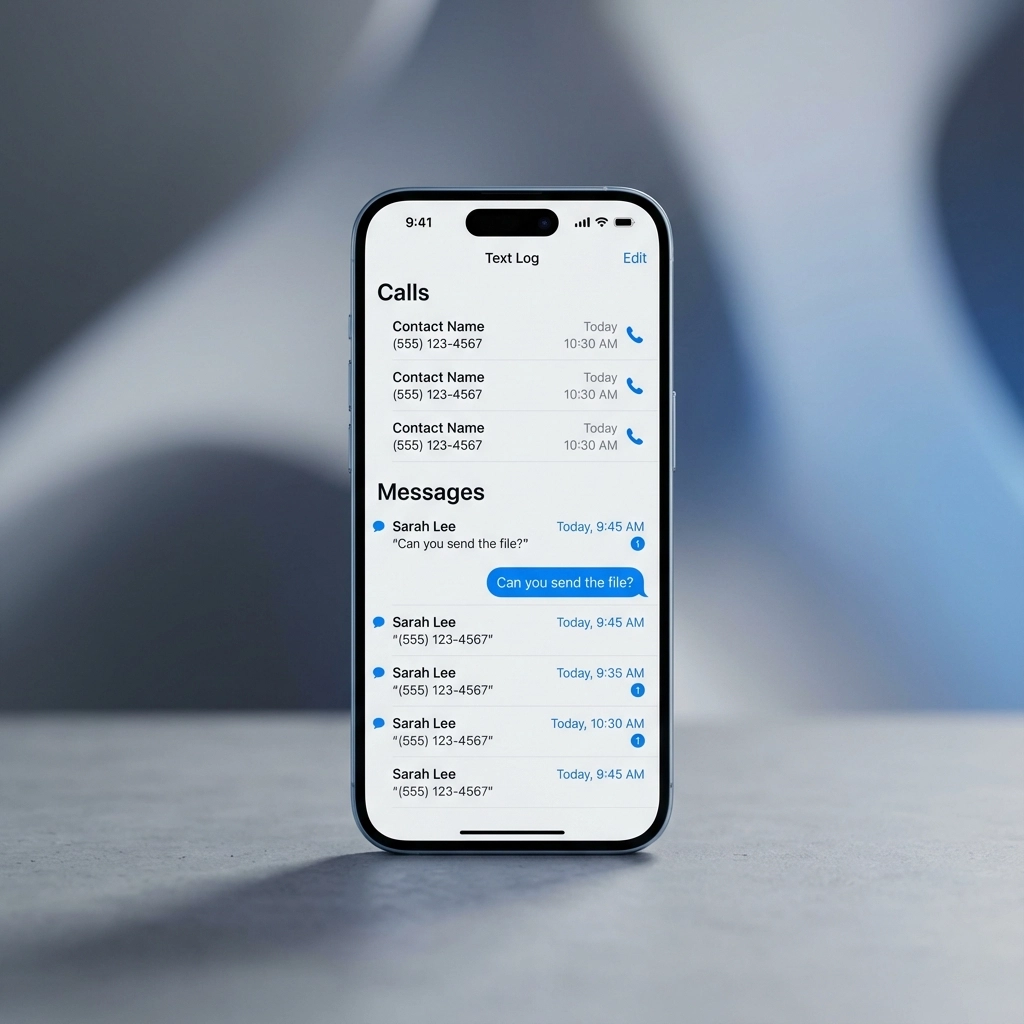
Your attorney can obtain the at-fault driver's phone records through several legal mechanisms:
Subpoenas and Court Orders: Once a lawsuit is filed, your lawyer can formally request phone records from the driver's wireless carrier. Major carriers like Verizon, AT&T, and T-Mobile maintain detailed usage logs that show:
Text message timestamps down to the exact second
Incoming and outgoing call logs
Data usage indicating social media activity, web browsing, or app usage
Phone unlock times and screen activity
Preservation Letters: Even before filing suit, your attorney can send preservation letters to prevent the destruction of phone records and ensure crucial evidence remains available.
Phone Forensics: In some cases, examining the actual device can reveal deleted messages, recent activity, and usage patterns that support your claim.
When phone records show activity within minutes or seconds of your crash, this creates powerful evidence that's nearly impossible for the defense to dispute.
Video Evidence: Catching Texting in the Act
Video footage can provide visual proof of distracted driving that complements phone record evidence. Virginia's roadways are increasingly monitored by various camera systems that might have captured the moments before your accident.
Traffic Cameras: Virginia Department of Transportation operates traffic cameras throughout the state, particularly on highways like I-64, I-95, and I-495. These cameras may have recorded the other driver using their phone before impact.
Business Security Cameras: Stores, gas stations, restaurants, and other businesses along Virginia roadways often have security systems that monitor parking areas and adjacent streets. Even if cameras don't directly show texting, they might capture erratic driving behavior consistent with distraction.
Dash Cam Footage: Your own dash cam or those from other vehicles can provide crucial evidence. Many Virginia drivers now use dash cams, and footage from multiple angles can reconstruct the entire incident.
Red Light Cameras: Cities like Virginia Beach, Norfolk, and Richmond operate red light camera programs that might have captured relevant footage if your accident occurred at an intersection.
Acting quickly is essential: many systems automatically delete footage after 30-90 days, so your attorney should request preservation of video evidence immediately after your accident.
Witness Testimony: Human Eyes Don't Lie
Eyewitness accounts from people who observed the accident can provide crucial testimony about the other driver's behavior. Strong witness testimony should include specific observations such as:
Whether the driver was looking down repeatedly before the crash
If they saw a phone in the driver's hand or lap
Whether they noticed the glow from a phone screen on the driver's face
If the driver was drifting between lanes or driving erratically
Whether the driver failed to brake or react to changing traffic conditions
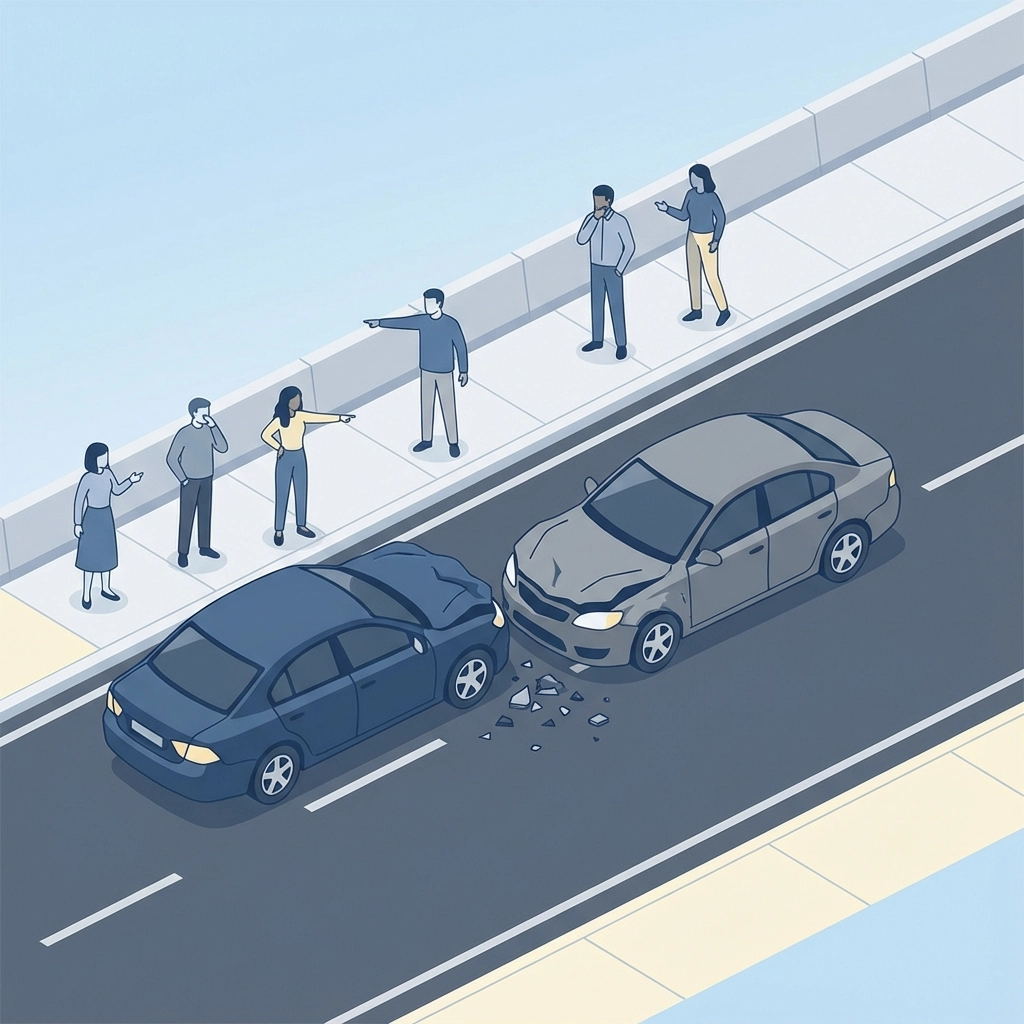
Collecting Witness Information: If you're able after your accident, gather contact information from witnesses immediately. Get names, phone numbers, and brief recorded statements while their memories are fresh. Even passengers in other vehicles can provide valuable testimony about what they observed.
Professional Witnesses: Sometimes other professionals on the road: truck drivers, delivery personnel, or off-duty police officers: make particularly credible witnesses due to their driving experience and training.
Police Reports: Official Documentation
The responding officer's police report can contain crucial evidence supporting your texting-while-driving claim. Virginia law enforcement officers are trained to look for signs of distracted driving and document their findings in official reports.
Look for these key elements in the police report:
Driver Admissions: Many drivers admit to using their phone when questioned by officers, especially if they're shaken up after an accident. These admissions are documented in the report and can be powerful evidence.
Citations Issued: If the officer cited the other driver for texting while driving, improper driving, or failure to maintain control, this strengthens your case significantly.
Officer Observations: Police reports often include details about the driver's demeanor, statements, and behavior that suggest distraction or inattentiveness.
Accident Scene Evidence: Officers document skid marks, point of impact, and vehicle positions that might indicate the other driver never saw you coming or failed to brake appropriately.
Additional Evidence to Strengthen Your Case
Beyond the primary evidence types, several additional factors can support your texting-while-driving claim:
Accident Reconstruction: Professional accident reconstruction experts can analyze vehicle damage, impact angles, and physical evidence to determine if the crash pattern is consistent with an inattentive driver. These analyses can show whether the other driver had time to react but failed to do so.
Social Media Activity: Check the other driver's social media accounts for posts made around the time of your accident. Screenshots of Facebook posts, Instagram stories, or tweets timestamped near your crash time can provide supporting evidence.
Phone Usage Patterns: Phone records might reveal the other driver's typical texting habits, showing they frequently use their device while driving during similar times of day.
Medical Records: If the other driver sought medical attention after the accident, their medical records might contain admissions about phone use or statements made to healthcare providers.
Virginia-Specific Legal Considerations
Virginia follows a contributory negligence rule, which means that if you're found to be even partially at fault for the accident, you cannot recover any compensation. This makes proving the other driver's complete responsibility through texting-while-driving evidence even more critical.

Virginia also has a two-year statute of limitations for personal injury claims, so time is of the essence in gathering evidence and filing your case. Phone records become harder to obtain as time passes, witnesses' memories fade, and video footage gets deleted.
Taking Action After Your Accident
If you suspect the other driver was texting when they caused your Virginia accident, take these immediate steps:
Document Everything: Take photos of both vehicles, the accident scene, and any visible phones or devices. Note the time of day and any observations about the other driver's behavior.
Report Your Suspicions: Tell the responding police officer if you believe the other driver was on their phone. Your statement becomes part of the official record.
Seek Medical Attention: Get medical care immediately, both for your health and to document your injuries. Prompt medical treatment strengthens your compensation claim.
Contact an Attorney: Coastal Virginia Law can immediately begin preserving evidence, requesting phone records, and building your case before crucial evidence disappears.
Avoid Social Media: Don't post about your accident on social media, as these posts can be used against you by the defense.
Why Professional Legal Help Matters
Proving texting-while-driving requires sophisticated legal strategies and resources that most accident victims don't have access to independently. An experienced Virginia car accident attorney can:
File formal subpoenas to obtain phone records from wireless carriers
Work with investigators to locate and preserve video evidence
Interview witnesses and take detailed statements
Coordinate with accident reconstruction experts
Handle all communications with insurance companies
Present evidence in the most compelling way possible
Insurance companies have teams of lawyers and investigators working to minimize their payouts. You deserve the same level of professional representation fighting for your rights.
Moving Forward with Confidence
Proving the other driver was texting while driving in Virginia requires a multi-faceted approach combining phone records, video evidence, witness testimony, and police documentation. While the process can seem overwhelming when you're dealing with injuries and vehicle damage, remember that Virginia law is on your side.
Every day, drivers make the dangerous choice to text behind the wheel, putting innocent people like you at risk. When you hold them accountable through the legal system, you're not just seeking compensation for your own losses: you're helping make Virginia roads safer for everyone.
The evidence needed to prove your case exists, but it won't wait forever. Phone records get purged, video footage gets deleted, and witnesses' memories fade. Taking swift action with experienced legal representation gives you the best chance of proving the other driver's negligence and securing the full compensation you deserve.
Your recovery matters, and you have the power to fight for it. Don't let a texting driver's careless decision define your future: take control of your case and demand the justice you deserve.


Comments