
How to Verify Divorce Papers in Virginia: 7 Warning Signs
Updated: Sep 26
A document that looks like a Virginia divorce decree is not proof that a court granted a divorce. Forged signatures, altered records, and fabricated case numbers are possible warning signs. The reliable way to confirm a decree is to check the issuing circuit court's records and obtain a certified copy if needed.
This guide explains seven signs that a divorce-related document deserves closer review. A suspicious detail does not by itself prove fraud; verify the court record and seek advice about your specific circumstances before acting on a document.
What Makes Divorce Papers "Fake"?
A fake decree may be entirely fabricated, while a genuine court or financial document may have been altered. A disputed asset value or incomplete disclosure is a different issue from a forged divorce decree, and each calls for its own evidence and legal analysis.
The most dangerous aspect of fake divorce papers is that they can appear legitimate at first glance. Scammers have access to professional printing equipment, official-looking seals, and detailed knowledge of court formatting that makes detection challenging without proper verification.
A false statement is not automatically perjury. Whether conduct supports a civil remedy or a criminal charge depends on the statement, the circumstances, and the elements of the applicable law. Preserve the original documents rather than assuming a particular offense occurred.
The 7 Red Flags That Signal Fake Divorce Papers
1. Unusual Email Addresses and Metadata Inconsistencies
One of the most revealing signs of fraudulent divorce documents comes from their digital trail. Fake emails accompanying divorce papers often contain spelling errors, unexpected attachments, and header irregularities that don't match their supposed court source.
Unexpected senders, spelling errors, or mismatched attachments warrant verification, but a lawyer or party may legitimately email court-related documents from a non-government address. Contact the issuing court through its published contact information and confirm the case number and filing independently.
2. Inconsistent Formatting and Document Details
Formatting varies by court and by document type. An unusual font or spacing is a reason to check the record, not proof that a document is forged.
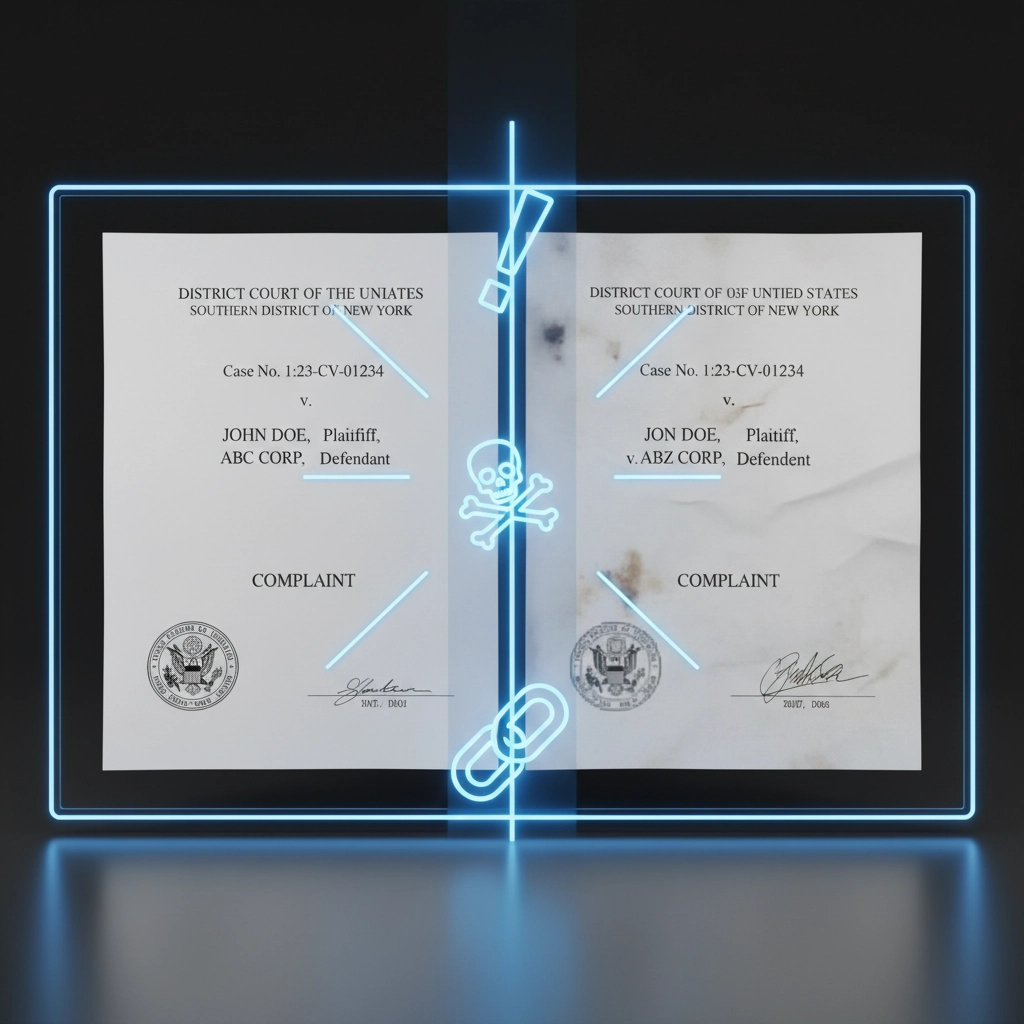
Pay close attention to official seals, case number formatting, and judge signatures. Scammers frequently use outdated templates or merge elements from different courts, creating documents that look official but contain subtle inconsistencies that trained legal professionals can easily identify.
3. Claims of No-Court Divorces
A Virginia divorce requires a court decree, but the parties do not always have to appear in a courtroom. Virginia Code § 20-106 allows evidence by affidavit or deposition in qualifying no-fault cases, and a divorce may be granted on filed documents when the statute's conditions are met. A promise of an instant divorce without a real court filing or decree is a reason to investigate.
Check the issuing circuit court and the final decree. Do not reject a genuine uncontested divorce merely because no in-person hearing occurred.
4. Pressure to Act Quickly
Fraudsters often create artificial urgency to prevent you from thoroughly examining documents or seeking professional legal advice. They might claim that court deadlines are approaching, that special rates are expiring, or that immediate action is required to protect your interests.
Court deadlines can be real, so do not ignore a filing or service notice. Verify any claimed deadline with the court or an attorney, especially if someone demands an immediate payment or signature.
5. Hidden Assets Through Third Parties
Transfers to third parties or unexplained changes in financial records may warrant closer examination during a divorce. They do not, by themselves, establish that a divorce decree is fake.
Watch for sudden transfers of property, vehicles, or financial accounts to third parties just before or during divorce proceedings. Similarly, be alert to claims of business partnerships or debts that conveniently reduce the apparent value of marital assets. These tactics often involve falsified documentation to support the deception.
6. Falsified Bank Statements and Financial Records
Altered bank statements, pay stubs, or debt records can affect disclosure and support issues. Compare questioned records with reliable originals and discuss how to obtain records through the proper legal process.
Modern technology makes creating convincing fake financial documents relatively easy, but forensic accountants can detect these alterations through various methods. Discrepancies in font consistency, mathematical errors in calculated totals, or statements that don't align with known spending patterns often reveal fraud.
7. Undervalued Property and Asset Claims
A substantial difference between a claimed asset value and reliable market evidence may justify a further valuation review. A difference of opinion about value is not necessarily fraud.
Real estate, vehicles, jewelry, art, and business interests are commonly undervalued in fraudulent divorce documents. Cross-reference claimed values with recent market data, previous insurance appraisals, or independent professional assessments to identify potential fraud.
Serious Legal Consequences You Face
The consequences of a forged document or material misrepresentation depend on what happened and what can be proved. The court may consider remedies in the divorce case; criminal charges require proof of a specific offense.
A court may address misconduct through available remedies, including appropriate orders concerning property, costs, or fees. None of those results is automatic, and the amount of any award depends on the record and applicable law.
Virginia has specific forgery statutes, including Va. Code §§ 18.2-168 and 18.2-172. Whether a particular act fits a statute, and whether prosecutors bring a charge, requires a fact-specific review. An inaccurate valuation or incomplete disclosure is not automatically a felony.
If a judgment was obtained through fraud, the available procedure and timing matter. Virginia Code § 8.01-428 addresses some grounds for relief from judgments; an attorney should review the actual order and record before suggesting a motion or predicting the outcome.
Protecting Yourself from Divorce Document Fraud
If you suspect your spouse has submitted falsified documents, immediate action is essential. Don't attempt to handle this situation alone: consult with an experienced divorce attorney who can properly evaluate the evidence and guide you through the legal process.
Start by compiling evidence that supports your suspicions. This includes original documents, previous financial statements, correspondence, and any other materials that contradict the questionable documents. Keep detailed records of all communications and maintain copies of everything in secure locations.
Consult counsel before filing a motion. The correct procedure depends on whether a case is pending, a final decree was entered, how the document was used, and any applicable deadlines.
For a document said to be a final Virginia divorce decree, check with the issuing circuit court clerk and request a certified copy when proof is needed. Do not rely solely on a copy sent by another person.

A divorce can be entered without an in-person hearing under Virginia Code § 20-106 in qualifying cases. The absence of a courtroom appearance alone is not evidence of fraud; confirm whether the court actually entered a decree.
When Professional Legal Help Becomes Essential
If you suspect a document is false, preserve it and seek advice promptly. A lawyer can compare it with the court record and identify the appropriate next step.
An experienced attorney can coordinate with forensic accountants, document experts, and other specialists to build a comprehensive case addressing the fraud. They understand the procedural requirements for challenging fraudulent documents and can guide you through the process while protecting your interests.
Verification begins with the issuing court's record. Additional expert analysis may be useful if authenticity or financial disclosure is disputed, but it is not required in every case.
If a document appears questionable, verify it before relying on it for a financial or legal decision. The court record and the particular facts matter more than a document's appearance.


Comments