
Fake Divorce Papers: 7 Red Flags You Need to Spot Before It's Too Late
- brookthibault
- Nov 4, 2025
- 5 min read
Discovering that divorce papers might be fake can turn your world upside down. Whether you're dealing with suspicious documentation from an ex-spouse, investigating potential fraud, or trying to verify the legitimacy of divorce records, knowing how to spot counterfeit divorce papers could save you from serious legal and financial consequences.
Fake divorce papers are more common than you might think. These fraudulent documents claim that a couple is legally divorced when they actually aren't, and they can include forged signatures, false court stamps, and fabricated case numbers. The consequences of accepting fake divorce papers as legitimate can be devastating: from invalid remarriages to financial fraud and custody complications.
In Virginia, where divorce laws are specific and court procedures must be followed precisely, understanding these red flags becomes even more critical. Let's examine the seven key warning signs that should immediately raise your suspicions about the authenticity of divorce papers.
Red Flag #1: Missing or Incorrect Court Information
Legitimate Virginia divorce papers will always include specific court information that you can verify. Every authentic divorce decree should contain:
The exact name of the Virginia court that issued the decree
The complete case number in the proper format
The judge's full name and signature
The court's official address and contact information

When examining divorce papers, pay close attention to court names. Virginia has specific naming conventions for its circuit courts, such as "Circuit Court of Virginia Beach" or "Circuit Court of Fairfax County." Generic names like "Virginia Family Court" or "State Court of Virginia" are immediate red flags, as these aren't actual Virginia court names.
You can always verify court information by contacting the clerk's office directly. If the court listed on the papers doesn't exist or has no record of the case, you're likely dealing with fraudulent documents.
Red Flag #2: Suspicious Signatures and Notarization
Authentic divorce papers require multiple signatures, and each one should look consistent and professional. Watch for these signature-related warning signs:
Judge's Signature Issues:
Signatures that look obviously forged or traced
Inconsistent handwriting compared to other court documents
Missing judicial seals or stamps
Signatures that don't match the judge's known signature style
Notarization Problems:
Missing notary seals or stamps
Expired notary commissions
Notary information that doesn't match state records
Signatures notarized on dates when the notary wasn't commissioned
In Virginia, you can verify a notary's status through the Secretary of the Commonwealth's office. This simple check can immediately expose fake notarization.
Red Flag #3: Format and Legal Language Inconsistencies
Virginia divorce decrees follow specific formatting requirements and use particular legal language. Fake documents often get these details wrong:
Format Red Flags:
Unusual fonts or formatting that doesn't match official court documents
Missing required legal headings or case captions
Incorrect spacing or margins
Missing page numbers or improper pagination
Language Issues:
Overly simplified language that lacks proper legal terminology
Missing required legal phrases like "It is hereby ORDERED and DECREED"
Incorrect Virginia Code citations
Grammar and spelling errors (official court documents are carefully proofread)
Virginia courts have standardized formats for divorce decrees, and any significant deviation from these standards should raise immediate suspicions.
Red Flag #4: Impossible Timelines and Dates
Virginia has specific waiting periods and procedural requirements for divorce that cannot be bypassed. Be suspicious of:
Timeline Issues:
Divorce decrees dated before Virginia's mandatory waiting periods
Documents showing impossibly fast processing times
Dates that conflict with known court schedules or holidays
Service dates that don't align with actual service requirements
In Virginia, uncontested divorces typically take at least 60 days from filing, while contested divorces often take much longer. Any divorce papers showing completion in less time than legally required should be thoroughly investigated.
Red Flag #5: Missing Required Information and Disclosures
Virginia divorce decrees must include specific information and disclosures. Fake papers often omit crucial details:
Required Elements:
Complete property division details
Specific custody arrangements (if applicable)
Spousal support provisions and duration
Debt allocation specifics
Attorney information for both parties
Virginia-Specific Requirements:
Compliance statements regarding Virginia divorce laws
References to mandatory parenting classes (when children are involved)
Proper venue statements
Service of process documentation
If divorce papers lack these essential elements or seem unusually vague about important details, they may be fabricated.
Red Flag #6: Questionable Paper Quality and Printing
While it might seem superficial, the physical quality of documents can reveal fraud:
Physical Warning Signs:
Paper stock that doesn't match official court documents
Poor print quality or obvious photocopying artifacts
Missing watermarks or security features
Inconsistent paper aging (some pages look newer than others)
Technical Issues:
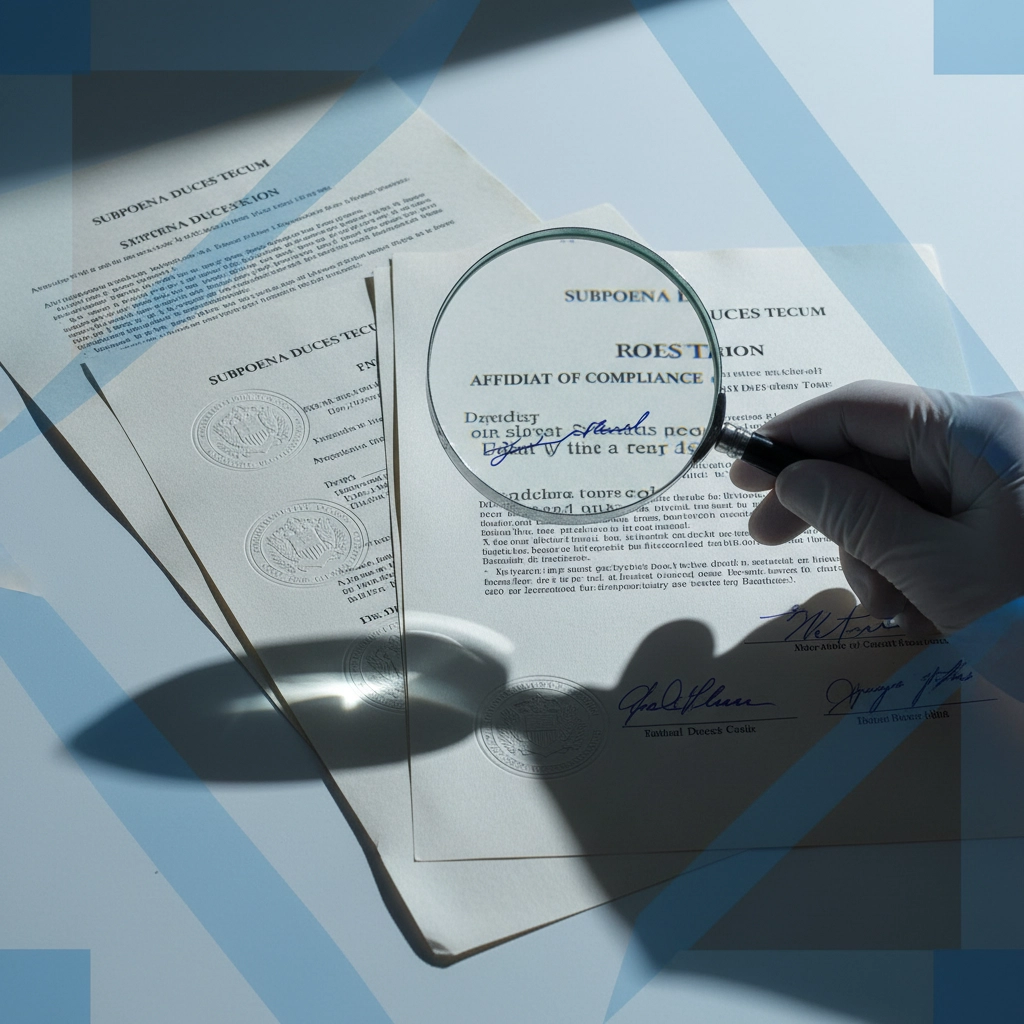
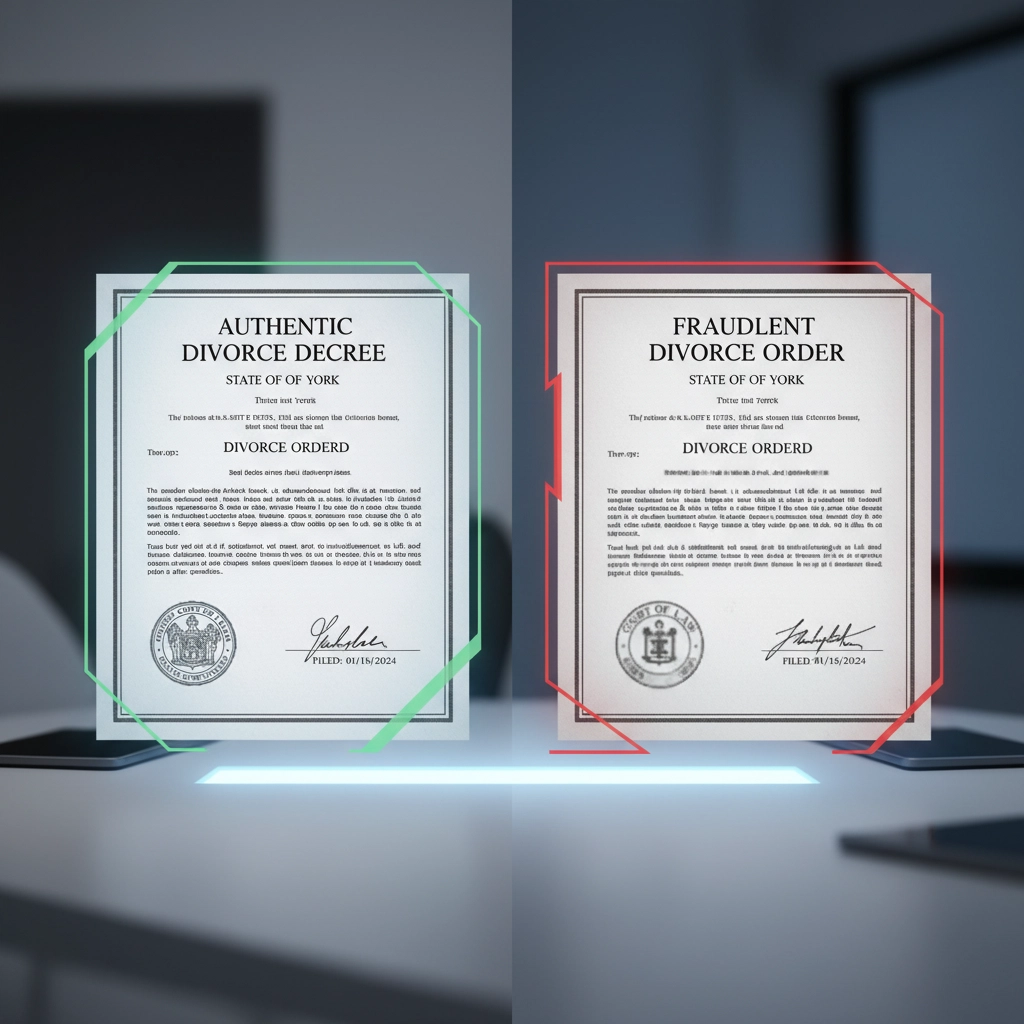
Pixelated or blurry court seals
Seals that appear to be digital copies rather than embossed originals
Color inconsistencies in official stamps or seals
Evidence of digital manipulation or editing
Virginia courts use specific paper and printing standards for official documents. Significant deviations from these standards warrant closer examination.
Red Flag #7: Inability to Verify Through Official Channels
The most definitive red flag is the inability to verify the divorce through official Virginia court records:
Verification Failures:
No record of the case in the court's database
Case numbers that don't match court numbering systems
Inability to locate the case through Virginia's court record systems
Court personnel who have no knowledge of the case
Database Inconsistencies:
Information that doesn't match public records
Conflicting details between the papers and official databases
Missing entries in required legal databases
Discrepancies in vital statistics records
What to Do If You Suspect Fake Divorce Papers
If you've identified any of these red flags, take immediate action:
Document Everything: Photograph or scan all suspicious documents
Contact the Court: Reach out to the clerk's office of the supposed issuing court
Verify Online: Check Virginia's court case information systems
Consult an Attorney: Get professional legal advice about your specific situation
Report Fraud: If confirmed fake, report the fraud to appropriate authorities
Virginia-Specific Considerations
Virginia's legal system has particular features that affect divorce document verification:
All divorce cases must be filed in circuit courts, not general district courts
Virginia requires specific residency requirements that should be documented
The state has mandatory waiting periods that cannot be waived
Certain Virginia Code sections must be cited in legitimate divorce decrees
Protecting Yourself Moving Forward
Understanding these red flags empowers you to protect yourself from divorce document fraud. Remember that legitimate concerns about document authenticity are always worth investigating: the consequences of accepting fake papers are simply too severe to ignore.
If you're dealing with suspicious divorce papers or need help verifying the authenticity of legal documents, don't navigate this complex situation alone. The experienced family law attorneys at Coastal Virginia Law understand the intricacies of Virginia divorce procedures and can help you determine whether documents are legitimate.
Contact Coastal Virginia Law today for a free consultation. Our team will review your documents, help you verify their authenticity, and guide you through whatever legal steps may be necessary to protect your rights and interests. Call us now: when it comes to potentially fraudulent legal documents, time is of the essence.
Don't let fake divorce papers derail your life or legal standing. With the right legal support, you can navigate this challenging situation and ensure your rights remain protected under Virginia law.


Comments