
Common Mistakes to Avoid When Splitting Pensions in Divorce
- brookthibault
- Nov 17, 2025
- 5 min read
Dividing pensions during divorce represents one of the most complex financial decisions you'll face during this challenging time. Unfortunately, mistakes made during pension division can haunt you for decades: and they're often impossible to fix once your divorce is finalized. Understanding these common pitfalls can empower you to protect your financial future and avoid costly errors that could impact your retirement security.
Understanding Different Types of Retirement Plans
One of the most fundamental mistakes divorcing couples make is not knowing exactly what type of retirement plan they're dealing with. This isn't just a minor detail: it's the foundation that determines how your pension can be legally divided.
Defined benefit plans (traditional pensions) promise specific monthly payments during retirement based on factors like years of service and salary history. Defined contribution plans (like 401(k)s) function more like investment accounts where the final value depends on contributions and market performance. Cash balance plans represent a hybrid approach, combining elements of both.

Each type requires different division methods and documentation. Some plans must be divided using a Qualified Domestic Relations Order (QDRO), while others may not require such formal court orders. Certain government or military pensions have their own unique division requirements that don't follow standard QDRO procedures.
Without understanding these distinctions, you might agree to a division method that's legally impossible to implement: leaving you scrambling to renegotiate after your divorce decree is already signed.
The Critical Importance of Division Dates
Failing to establish a clear, specific date for pension division is a direct path to expensive post-divorce litigation. This seemingly administrative detail actually determines which portions of retirement benefits qualify as marital property subject to division.
You'll need to decide whether the pension will be divided as of:
The date of separation
The date of filing for divorce
The date of the final decree
Another mutually agreed-upon date
This timing matters significantly because pension values can fluctuate. If the account grows after separation, the account holder will likely prefer a later division date to retain more value, while you may prefer the earlier separation date.
Here's what you need to do: Establish and document the specific division date in your settlement agreement before negotiations become contentious. This eliminates a major source of future disputes and provides clarity for both parties.
Calculating Marital vs. Non-Marital Portions
A particularly tricky situation arises when one spouse worked the same job both before and after getting married. Only the pension benefits earned during the marriage typically qualify as marital property subject to division.
For example, if your spouse worked for the same company for 20 years total: 5 years before marriage and 15 years during marriage: only the pension value accumulated during those 15 married years would be considered marital property. The calculation becomes even more complex when factoring in salary increases, promotions, and changing contribution rates over time.
This complexity increases when dealing with:
Government employees with complex pension formulas
Railroad workers subject to special retirement systems
Careers with significant gaps or part-time periods
Multiple job changes during the marriage
Getting this calculation wrong can lock you into an unfair division that you'll live with throughout retirement. Consider working with a pension valuation expert to ensure accurate calculations, especially for high-value pensions or complex employment histories.
Avoiding the House-for-Pension Trade Trap
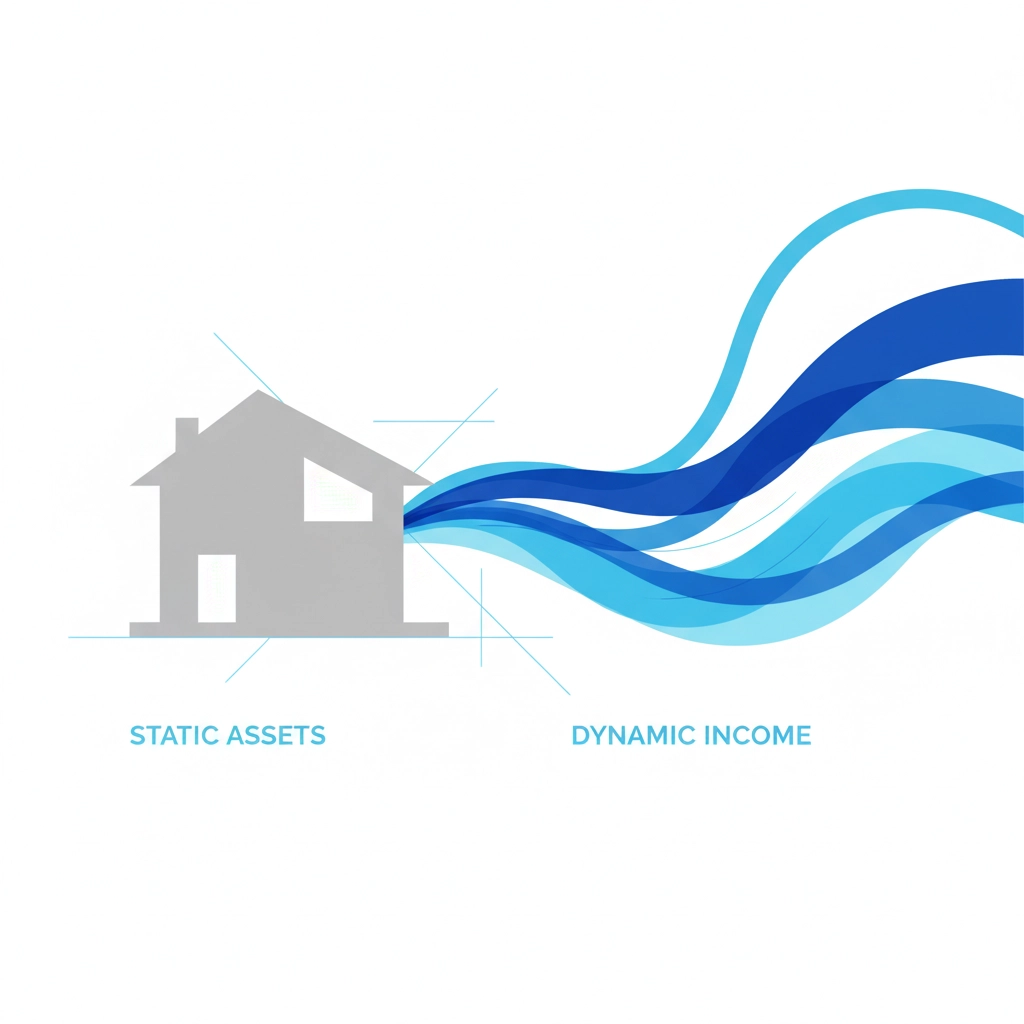
One of the most common: and potentially devastating: mistakes is trading your share of a pension for the marital home. Even when these assets have equal values at the time of divorce, they represent fundamentally different financial instruments with very different long-term implications.
A house requires ongoing financial investment. You'll need income to cover:
Property taxes and insurance
Maintenance and repairs
Utilities and upkeep
Potential major renovations
Homeowners association fees
A pension, by contrast, generates income rather than consuming it. This income stream can provide financial stability throughout your retirement years.
Consider this scenario: You receive a $200,000 house while your ex-spouse keeps a $200,000 pension. While initially equal, after 10 years you might find yourself house-rich but cash-poor, struggling to maintain the property on a limited income, while your ex-spouse enjoys steady monthly pension payments.
Market Risk and Division Methods
When dividing retirement accounts, avoid agreeing to flat dollar amounts, especially in volatile markets. Here's why this approach can backfire:
If you agree to split a $150,000 401(k) by giving you $75,000, but the market declines before the transfer occurs, your ex-spouse receives their full $75,000 while you get whatever remains: potentially much less.
The better approach: Split retirement accounts based on percentages rather than fixed dollar amounts. This way, both parties share proportionally in any market gains or losses between the divorce decree and the actual transfer.
Understanding Tax Consequences
Not all retirement assets are created equal when it comes to taxes. This oversight can result in dramatically different after-tax values, even when pre-tax values appear equal.
Pre-tax retirement accounts (traditional 401(k)s, traditional IRAs, most pensions) will be taxed as ordinary income when withdrawn. Post-tax accounts (Roth IRAs, Roth 401(k)s) have already been taxed, so qualified withdrawals are tax-free.
Early withdrawals from most pre-tax accounts also trigger additional 10% penalties if you're under age 59½, though divorce-related transfers through proper court orders can sometimes avoid these penalties.
Action step: Calculate the after-tax value of retirement assets before agreeing to any division. A $100,000 traditional 401(k) and a $100,000 Roth IRA are not equivalent assets.
Protecting Surviving Spouse Rights
Failing to address what happens if your ex-spouse dies before retirement can leave you financially vulnerable. Different pension plans handle survivor benefits differently:
Some plans automatically provide survivor benefits to former spouses if specified in divorce orders
Others require specific survivor benefit elections during the divorce process
Some plans provide no survivor benefits to former spouses under any circumstances
Critical action items:
Explicitly address survivor benefit scenarios in your divorce settlement
Understand whether you'll need to elect survivor benefits and any associated costs
Consider whether life insurance might provide better protection than pension survivor benefits
Beneficiary Designation Updates
Even with a comprehensive divorce decree, don't forget to update beneficiary designations on all retirement accounts. These forms typically take precedence over divorce orders and wills. If your ex-spouse remains listed as the beneficiary, they'll likely receive those funds regardless of what your divorce paperwork says.

Update beneficiaries on:
401(k) and 403(b) accounts
Traditional and Roth IRAs
Pension plans
Annuities
Life insurance policies through work
Documentation and Professional Help
Getting proper documentation early in the divorce process is essential. Pension orders can be complex to negotiate and draft, so gather comprehensive information before settlement discussions begin.
Essential documentation includes:
Complete pension plan summaries
Recent benefit statements
Plan administrator contact information
Summary of plan distribution options
Information about loans against retirement accounts
Don't rush through the divorce process without ensuring proper documentation of retirement asset divisions. Working with experienced Virginia divorce attorneys can help ensure your interests are protected throughout this complex process.
Protecting Long-Term Interests
When retirement is still years away, additional protections become necessary. Between your divorce and your ex-spouse's retirement, circumstances can change significantly:
Your ex-spouse might remarry, potentially affecting your pension rights
Job changes could impact pension values or availability
Death before retirement could eliminate your expected benefits entirely
A properly drafted court order should anticipate these scenarios and provide appropriate protections for your financial security.
Taking Control of Your Financial Future
Pension division mistakes often prove impossible to correct once your divorce is final. By understanding these common pitfalls and working with qualified professionals, you can protect your retirement security and avoid costly errors.
Remember that every divorce situation is unique, and pension division strategies that work for others might not be appropriate for your circumstances. The investment in proper professional guidance during your divorce can pay dividends throughout your retirement years.
If you're facing pension division issues in your Virginia divorce, don't navigate this complex process alone. Contact Coastal Virginia Law to discuss your specific situation and explore strategies to protect your financial future.


Comments